I was a master’s student studying at the University of Reading. I was intrigued by the historic architecture but at the same time questioned its transformation. Later on, I volunteered for the Reading Museum, and actively engaged with volunteers and organisations to know more about their expectations on, and encounters with, heritage and historic sites in their neighbourhood. I was eager to gain professional advice, guidance and hands-on experience on heritage conservation and curation.
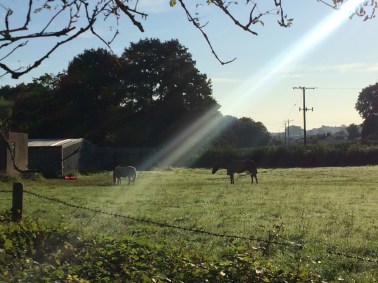
Located on a country lane amidst farmlands and residential houses, the Temple Cloud Archaeology Collection Store houses an archaeology collection from West England, most of which were transferred from the Fort Brockhurst store in 2016.
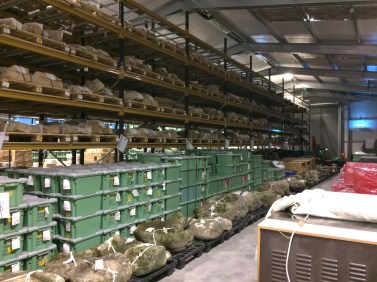
The English Heritage West Curatorial and Conservation team cares for historic sites and the artefacts excavated in West England over the last century. Some of the sites are familiar to people within the neighbourhood, such as chapels, gardens and monuments; while some are renowned worldwide attractions, like Stonehenge and other magnificent castles. The conservation and interpretation work on the historic environment and collection re-tells past events (or at least hypothesises what we think might have happened). As a form of community engagement, volunteers were also recruited to help out with repacking in order to meet the busy move-in deadline. Planning of further engagement with the community, such as guided tours, is underway.
Throughout the placement I worked with curators on collection auditing, packing and repacking of artefacts, conservation cleaning, and documentation of collections from various sites in the West. Essential skills of using the Collections Management System (HOMS) were demonstrated to all members of staff – location updates are frequent actions for the rehousing of the collection to ensure the accuracy of the record and adding relevant information onto the object.
The project I had been given was the documentation and repacking of the newly acquired collection from Sherborne Old Castle, Dorset. It included 96 stone works, and over ten thousand organic objects, human remains, photographs, slides, negatives, scientific reports and paper documents, compositing a thorough record of the several excavations in the 1930s to 1980s. Over 3,300 items from the Sherborne Old Castle collection were documented and repacked in four months.
I also assisted in the execution of preventive conservation on paper, metal, wood, medieval ceramics and stonework. Dee Lauder, author of English Heritage’s acclaimed book Pests in Houses Great and Small gave us a lecture on pest management and showed us ways to tackle and monitor pest infestation; humidity and other potential risks on the collection were also monitored by the conservators.
Taking the opportunity of the yearly inspection, I have shadowed conservators in performing conservation auditing duties in several sites. Conservators would review the conditions of the collection and effectiveness of current conservation measures with a point-based system. Interviews with the site manager were conducted to gather information that would facilitate long term planning.
The collections management placement at English Heritage had been extensive and intensive. It offered practical knowledge and invaluable experience in handling artefacts and a collection of a whole range of materials. Most importantly, this experience has shed light on current issues concerning heritage conservation, particularly on significance evaluation.
The many conversations and discussions in which they provided viewpoints on heritage conservation and the organisational operation had nurtured me to become an all-rounded museum professional. Across time, certain rules and guidelines change. Some questions of mine have been answered, and I am now more confident in pursuing a career to work for the betterment and enjoyment of many more generations to come.
 Hare out of (its) cave