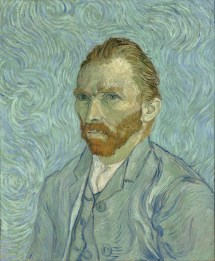
Painters of the epoch-making film Loving Vincent “will probably hate that yellowish coat afterwards,” said Writer, Producer and Director Hugh Welshman, with a red beard resembling the artist he and Director Dorota Kobielahas worked on for the past seven years, in the UK and Ireland Premiere of the movie.
Van Gogh is Van Gogh. We know him by the Sunflowers, The Starry Night or his symbolic self-portraits together with the horrific story of his left ear. His works penetrate high school art textbooks; and he was probably, unintentionally, a significant contributor to the intuition of many that ‘artists are tragic’ — the way his story was told over the century and in the movie.
It is so to many contemporary artists, and that’s how it will probably be — Van Gogh is Van Gogh, no contemporary artists would try to imitate his skills, not to mention reworking of his subject matter to the day is a cliché. His style is so distinguishable that contemporary painters and artists wipe out every influence of it in their practices without actually knowing it. Perhaps except colleges, auction houses, galleries, and of cause Painters of this revolutionary film project, “learning to paint in the Van Gogh style and getting rid of their own styles” for the last two years of the post-production. (From the Q&A session at National Gallery on 9 October 2017).
Such re-creation of the style is no-doubt ambitious, in a positive way, that saves it from being cliché with an added layer of lively and engaging qualities underneath the frames. It is the team’s careful thought to bring forth Vincent’s story instead of Van Gogh’s, to the world through an enthusiast, like many of us, drowning in some ‘village gossips’. (I’ll have to stop at this point, don’t want to be a spoiler to some)
While the team describes it as an accomplishment, the legacy of the movie polymerises. The cooperation of Van Gogh Museum in Amsterdam and the production team sets a great example of Museology in a digital age.
I tell you, if one wants to be active, one mustn’t be afraid to do something wrong sometimes, not afraid to lapse into some mistakes. To be good — many people think that they’ll achieve it by doing no harm — and that’s a lie, and you said yourself in the past that it was a lie. That leads to stagnation, to mediocrity.
Vincent Van Gogh, letter to Theo van Gogh, Nuenen, Thursday 2 October 1884
It might be really helpful for those who’d like to know more about Vincent Van Gogh through his words, not his art:
http://vangoghletters.org/
It is certainly devastating to erase the traces of lemon yellow and Prussian blue while drawing new frames on another repeatedly; not only do the painters skilfully avoided the appearance of a green coat eventually, but the team found a neat balance between the two contrasting sides of the artist.
To see such an obsession to the old master and the attempt to remap his life is a remedy to art students in the 21st century who are lost in the contemporary art paradoxes. (But we’ll see.)
Here’s another story about the recruitment of the painters from Poland in 2014, which might explain a bit about the Polish UK co-production model and perhaps the ‘lost’ feeling:
https://www.theguardian.com/film/2014/mar/18/uk-van-gogh-film-polish-artists
 Hare out of (its) cave